
Erie County Deed Records and Property Lookup
Erie County deed records are maintained by the Recorder of Deeds office in Erie, Pennsylvania. Located in the far northwest corner of the state along the shores of Lake Erie, Erie County is one of the largest counties in Pennsylvania by population. The Recorder of Deeds keeps all land records and property documents for the county. Searching Erie County deed records gives you access to deeds, mortgages, easements, and other recorded instruments. Records are available online and in person at the county government offices in Erie.
Erie County Quick Facts
About Erie County Deed Records
Erie County was established in 1800 from Allegheny County. The county seat, the City of Erie, sits directly on Lake Erie and is Pennsylvania's only Great Lakes port city. Erie County deed records document land ownership across the county's city, boroughs, and townships from the county's earliest years to the present day. The Recorder of Deeds office functions as an elected row office, independent of the county executive and county council.
Under 21 P.S. § 351, all deeds for Erie County property must be recorded with the Recorder of Deeds in Erie. The Recorder maintains the official index and archives for all recorded land documents. Erie County has a County Executive and a County Council with seven district representatives, which sets it apart from most Pennsylvania counties that operate under a three-commissioner board. Despite the different governmental structure, the Recorder of Deeds remains a separately elected row office. The county website at eriecountypa.gov provides access to county services including the Recorder's office.
Erie County deed records include warranty deeds, quitclaim deeds, sheriff's deeds, mortgages, mortgage satisfactions, easements, oil and gas leases, UCC financing statements, subdivision plans, power of attorney documents, and notary commissions. The county is also committed to open government, providing open budget and spending transparency tools, right-to-know request processes, and public bidding information online. This commitment to transparency extends to land records, which are part of the publicly accessible record kept by the Recorder of Deeds.
Erie County Recorder of Deeds
The Erie County Recorder of Deeds operates as a row office within Erie County government. The county's Clerk of Records, Aubrea Hagerty-Haynes, also plays a role in court and records functions. The dedicated Recorder of Deeds page at eriecountypa.gov/recorder-of-deeds provides current contact information and details about what records are available. Office hours are Monday through Friday during regular business hours.
In-person searches at the Erie County Recorder's office can be done by grantor or grantee name, book and page number, instrument number, or recording date range. Staff can help locate specific documents and explain the indexing system. Certified copies of any recorded deed or mortgage are available for a fee. Staff cannot provide legal advice, perform title searches, or advise on whether a property has existing liens. Consult a licensed title company or Pennsylvania real estate attorney for those services.
| Office | Erie County Recorder of Deeds |
|---|---|
| Address | 140 West Sixth Street, Erie, PA 16501 |
| Phone | 814-451-6250 |
| Online Search | eriecountypa.gov/recorder-of-deeds |
Searching Erie County Deed Records Online
Erie County provides access to deed records through the Recorder of Deeds page at eriecountypa.gov. The statewide portal at pa.uslandrecords.com also covers Erie County along with all 67 Pennsylvania recorder districts. This portal allows remote searches by party name, document type, and date range without visiting the Erie County courthouse.
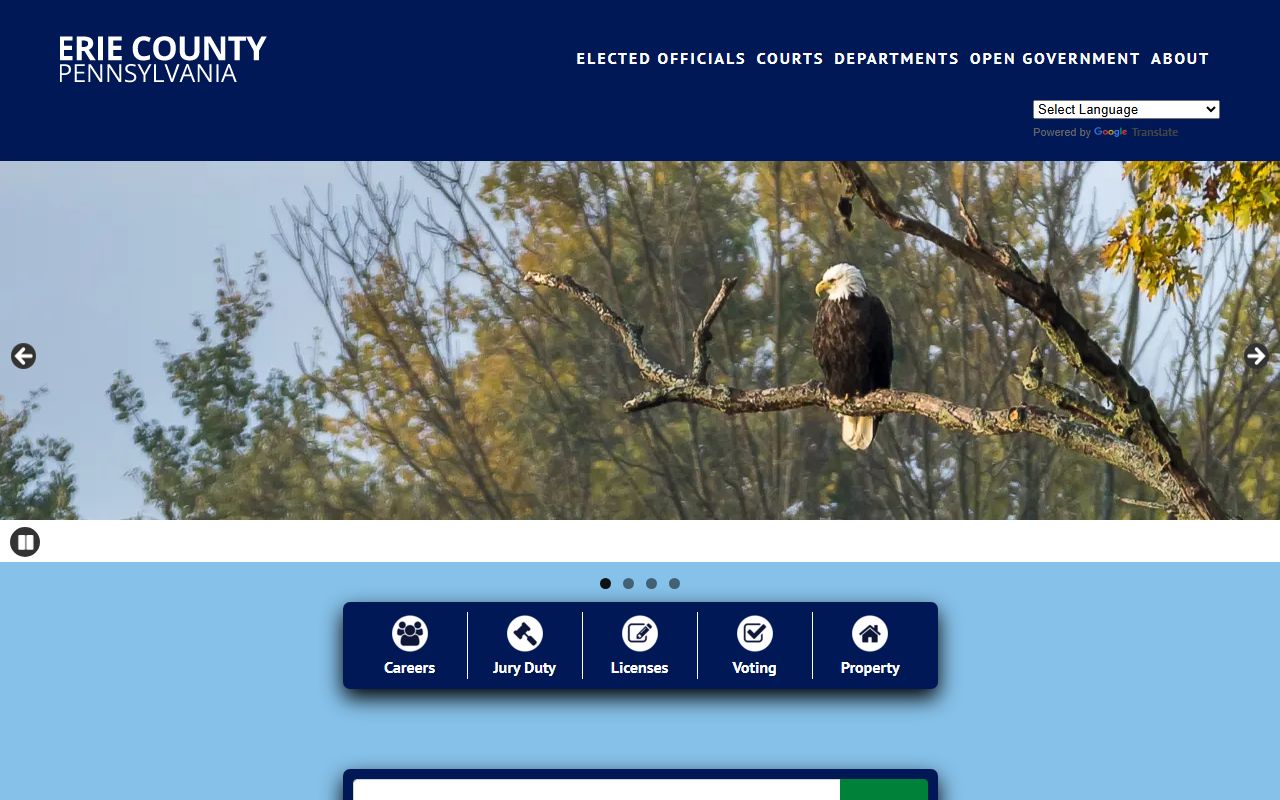
The image below is from the Erie County official website, the main hub for county government services including the Recorder of Deeds.
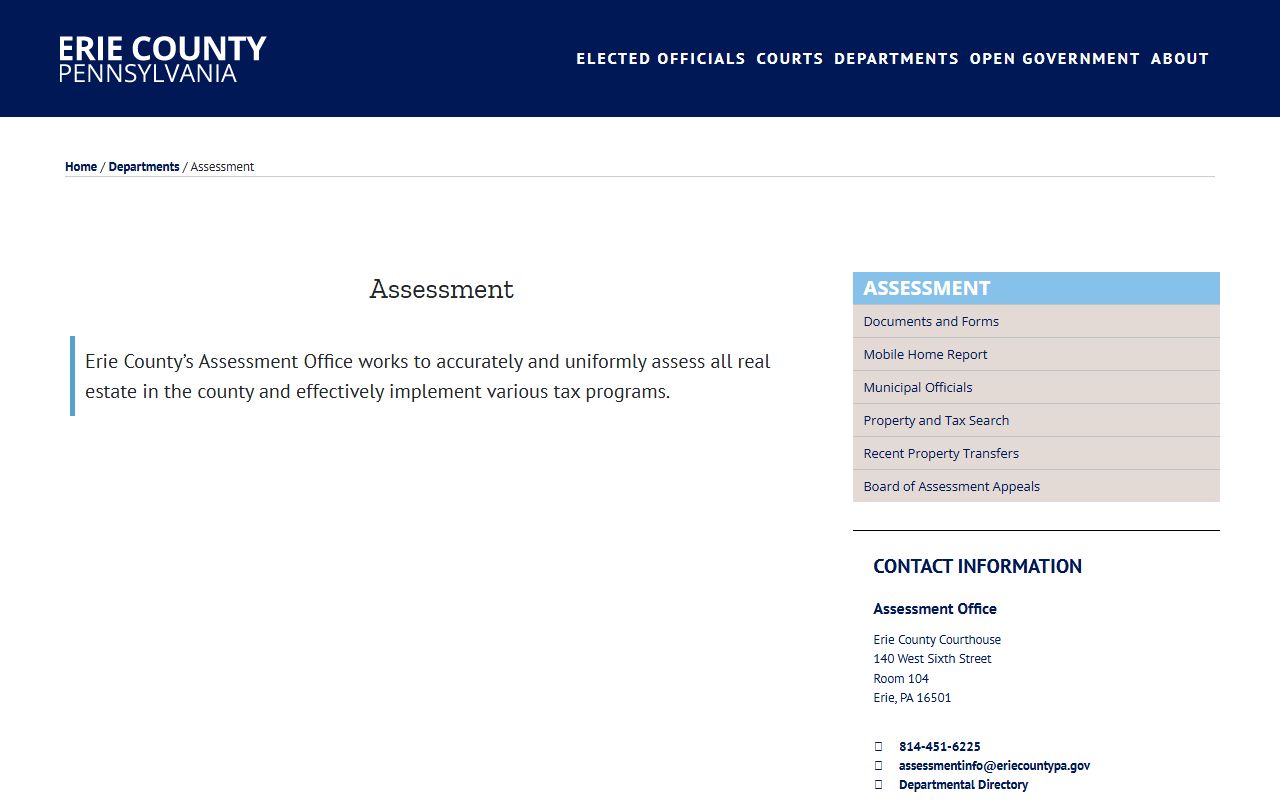
The image below shows the Erie County assessment office page, which provides property data that complements the deed records maintained by the Recorder.
The Pennsylvania Association of Recorders of Deeds maintains a fee calculator at padeeds.com/fee-calculator and a county officials directory. Third-party portals such as NETROnline also link to Erie County recorder and assessor resources, providing additional entry points for property research.
Erie County Recording Requirements
All documents submitted for recording in Erie County must meet Pennsylvania's requirements. Deeds must include a complete legal description, the names of all parties, a notary acknowledgment, and a Uniform Parcel Identifier (UPI). The UPI requirement under 16 P.S. § 9781 links each recorded instrument to the county's tax parcel mapping system. Documents without a valid UPI will be returned unrecorded.
Pennsylvania's 1% state realty transfer tax applies to most property transfers in Erie County. Local municipalities in the county add their own transfer taxes. Form REV-183, the Realty Transfer Tax Statement of Value, must accompany every deed at the time of recording. Certain transactions qualify for tax exemptions, including family transfers, charitable conveyances, and corrective deeds. The Pennsylvania Department of Revenue at pa.gov provides current rate and exemption information. Any notary whose acknowledgment appears on a document can be verified at notaries.pa.gov.
Erie County Open Government and Land Records
Erie County takes a proactive approach to public information. The county provides open budget and spending data, an online right-to-know request process, and transparent bidding information. These tools reflect the county's commitment to accessible government, and the same principle extends to land records. Deed records are part of the public record, and the county's digital systems make it easier than ever to access Erie County deed records without visiting the courthouse in person.
For historical land records in Erie County, the Pennsylvania State Archives holds warrant registers and land records going back to the county's 1800 founding and before. Researchers tracing property back to the earliest settlements near Lake Erie can use the Archives' guides at pa.gov/agencies/phmc to find warrant applications and survey records that predate the modern Erie County deed recording system. Combining these historical records with current Erie County deed records gives the most complete picture of any parcel's ownership history.