
Scranton Property Deed Records
Scranton deed records are filed and maintained by the Lackawanna County Recorder of Deeds. Scranton is the county seat of Lackawanna County in northeastern Pennsylvania, and all real property documents for city parcels are recorded through this office. Buyers, title companies, and researchers can search Scranton deed records using the county's online Eagle Recorder system, a historical index portal covering records back to 1878, or by visiting the office in person during business hours.
Scranton Quick Facts
Scranton Deed Records and the Lackawanna County Recorder
All Scranton deed records are managed by the Lackawanna County Recorder of Deeds. The Recorder's primary role is to protect property ownership by recording and indexing documents that establish the official record of real estate interests. This includes both recording instruments and collecting realty transfer taxes on behalf of the Pennsylvania Department of Revenue. Evie Rafalko McNulty serves as Recorder of Deeds for Lackawanna County, an elected position with a four-year term.
The office handles a wide range of property documents. These include deeds, mortgages, mortgage satisfactions, mortgage assignments, powers of attorney, leases, UCC filings, real estate agreements, charters of non-profit corporations, notary commissions, elected official commissions, and veterans' discharge documents. Every instrument is indexed and becomes part of the permanent public record for the affected Scranton property. The office is self-sufficient and generates revenue that flows into the Lackawanna County General Fund.
Under Pennsylvania law, the Recorder of Deeds office must be separate from other county offices involved in land transactions. This separation ensures there is no conflict of interest when recording or certifying documents for Scranton properties. Recording is legally significant: under 21 P.S. § 351, the first party to record a valid deed has priority over later claimants under Pennsylvania's race-notice statute.
Note: The Lackawanna County Recorder of Deeds office is designated as a fee office, meaning its fees are set by the Pennsylvania State Legislature rather than by the county.
Search Scranton Deed Records Online
The Lackawanna County Eagle Recorder system provides online access to Scranton deed records from 1957 to the present. The Eagle Recorder portal at lackawannacountypa-web.tylerhost.net is the county's primary web-based deed search tool. You can search by grantor name, grantee name, document type, date range, or instrument number. The system is available 24 hours a day and is mobile-friendly. Both subscription access for frequent users and pay-per-document options for occasional researchers are offered.
For historical Scranton deed records predating the Eagle Recorder system, Lackawanna County maintains a separate index book search covering 1878 through 1956. The Lackawanna County historical index portal at portal.laserfiche.com uses the Laserfiche document management system to make these older records searchable online. You can search by name and date range and view digital images of the original index books. This historical resource is particularly valuable for genealogy research and older title chains in Scranton. Access is free to the public.
The Lackawanna County Recorder of Deeds official page at lackawannacounty.org provides links to all online search tools for Scranton deed records along with recording requirements and contact information.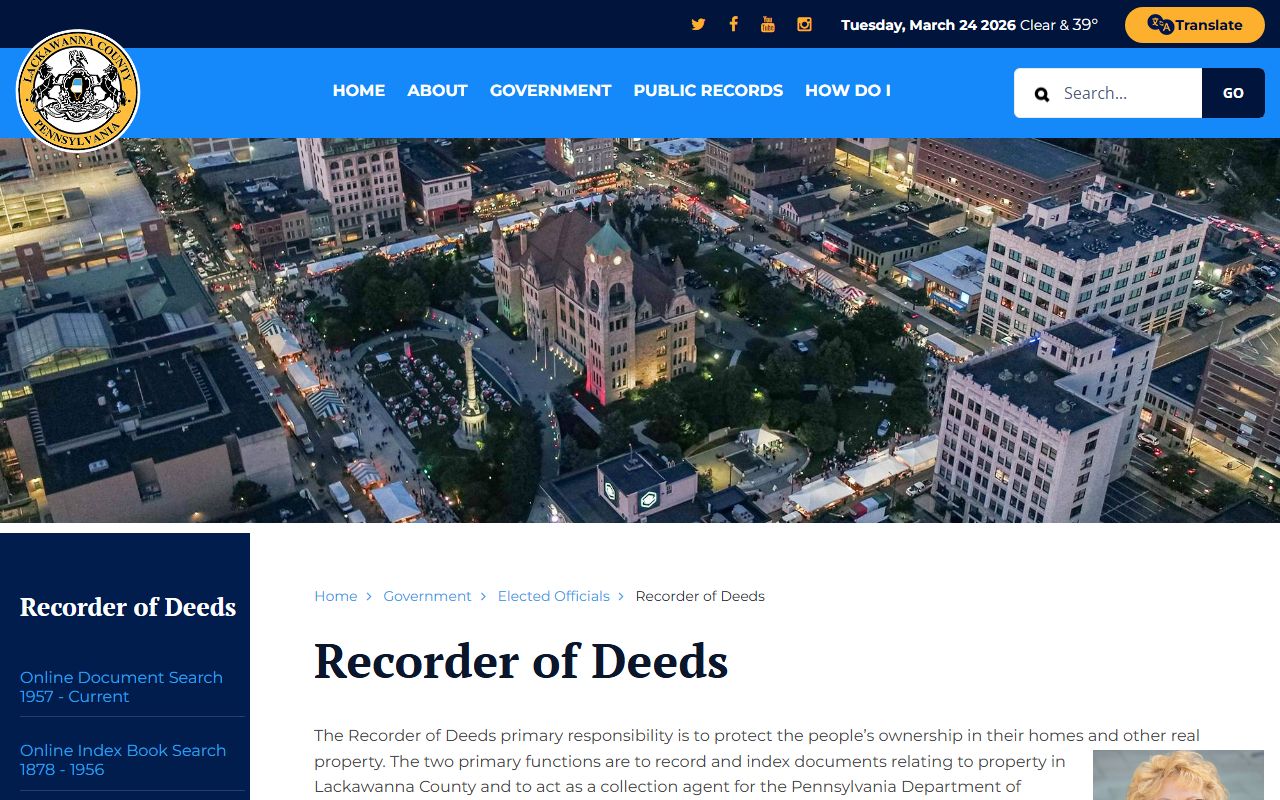
The Lackawanna County Recorder of Deeds page is the official starting point for anyone researching Scranton property deed records, whether online or in person.
Scranton Property Records: Historical Index Search
Lackawanna County has made significant investments in digitizing older Scranton deed records for online access. The historical Laserfiche index covers recorded instruments from 1878 to 1956, giving researchers access to grantor and grantee name indexes, book and page references, and scanned images of the original index pages. This resource fills the gap between pre-digital records and the current Eagle Recorder system, which begins in 1957.
The Lackawanna County historical deed index provides free public access to grantor and grantee records from 1878 to 1956, covering decades of Scranton property history in digitized form.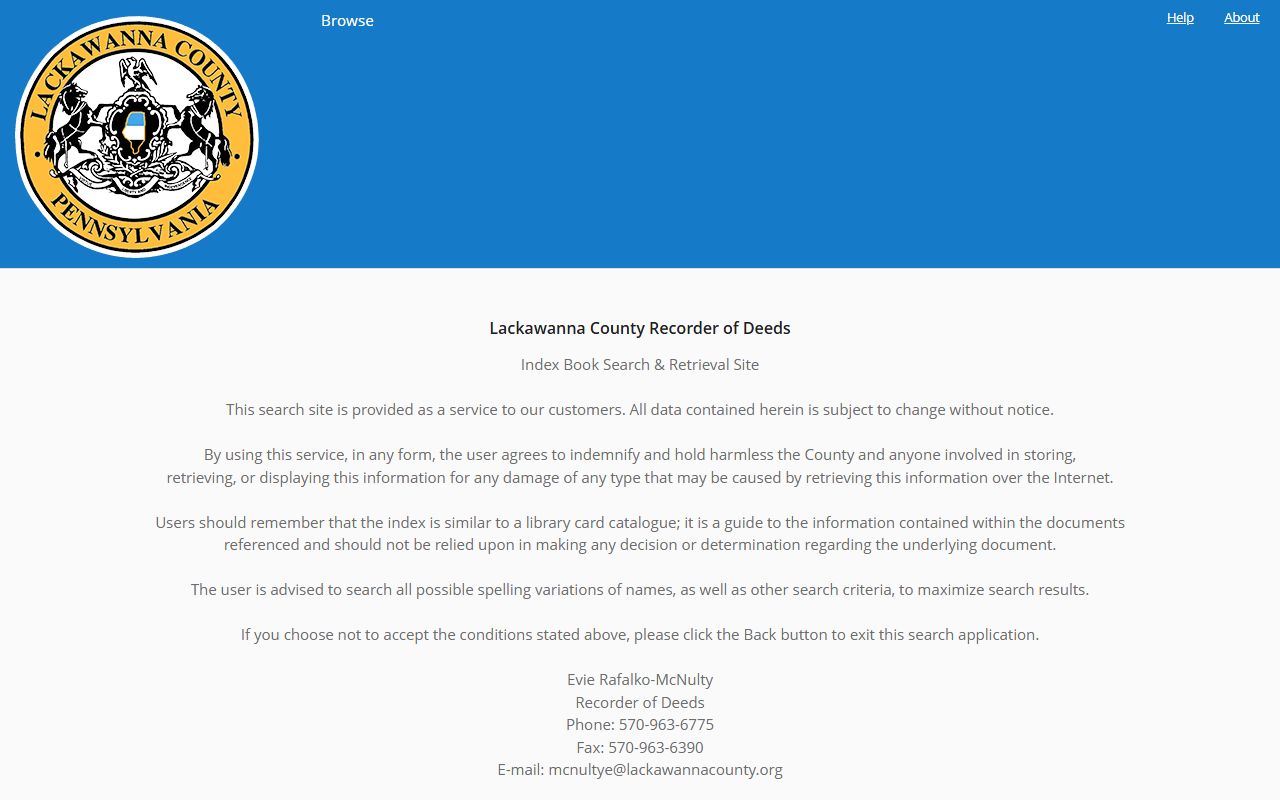
The historical index is an essential tool for Scranton title research involving properties with ownership histories that extend back into the early and mid-20th century, especially for genealogy or long-chain title searches.
For any Scranton deed records that fall outside both the historical index and the Eagle Recorder system, in-person research at the Recorder's office or the county archives may be required. Staff can assist with locating records and providing certified copies for legal use.
Lackawanna County Assessment Office for Scranton Properties
Property assessments for Scranton are handled by the Lackawanna County Assessment office. Assessment records include the current owner of record, the assessed value of the property, and the parcel identification number. Researchers often start with the assessment database to confirm the current ownership and locate the parcel ID before pulling deed records. The Lackawanna County Assessment Office at lcao.lackawannacounty.org provides an online search tool for Scranton and other county properties.
The Lackawanna County Assessment office maintains ownership and valuation records for all Scranton parcels, which can be searched online to support deed record research.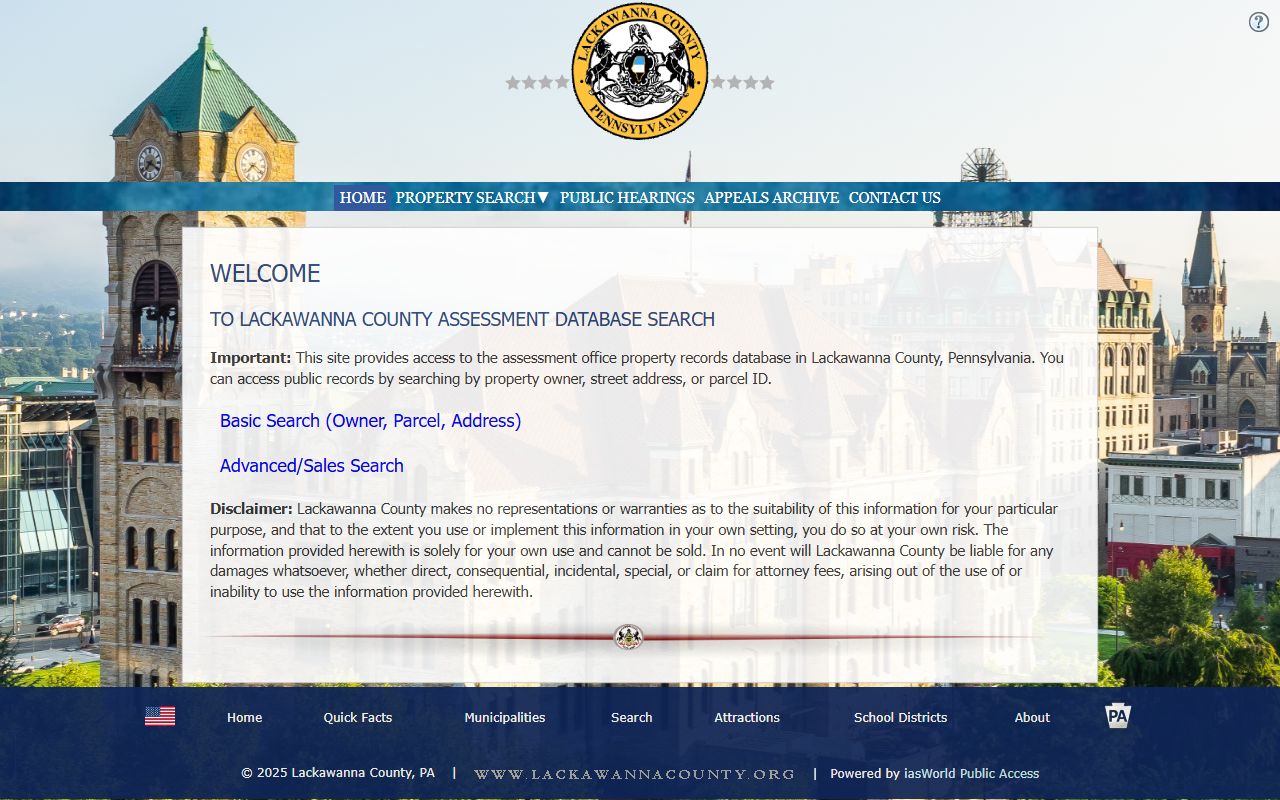
The assessment office database links current owner data to parcels in Scranton, and cross-referencing this information with the Eagle Recorder deed index gives researchers a full picture of a property's current status and recorded history.
Note: The county assessment database is updated regularly and reflects ownership changes that have been processed through the Recorder of Deeds office after a deed is recorded and indexed.
Recording Fees and Requirements in Scranton
The Lackawanna County Recorder of Deeds processes all deed recording fees according to the schedule set by the Pennsylvania State Legislature. Fee adjustments are announced by the office when changes take effect. Effective November 17, 2025, the CJEA fee increased from $2.50 to $3.50, and the Court/AOPC fees increased from $40.25 to $41.25. Electronic recording submissions calculate fees automatically, which reduces the chance of submission errors for Scranton deed filings. Documents mailed to the office with incorrect fees will be returned without recording.
Effective January 1, 2026, attachments on e-recordings are subject to an additional $0.50 per page fee to cover printing costs for the Department of Revenue. Documents brought directly to the office are not subject to this additional page fee. A fee calculator document is available for download from the Lackawanna County Recorder of Deeds page. All Scranton deed filings must include the appropriate transfer tax forms and payment at the time of recording.
Scranton property owners can also register for the county's property fraud notification program. The Lackawanna County fraud registration program allows homeowners to receive alerts when a document is recorded against their name. This free service is recommended for all Scranton property owners as a way to monitor for unauthorized property transfers. Registration involves a simple form and provides ongoing monitoring of your name in the deed index.
Scranton Tax Office and Property Records
Property tax collection for Scranton is handled separately from deed recording. The Scranton Tax Office at scrantontaxoffice.org manages local real estate tax billing and payment for city properties. Deed records and tax records are related but held by different offices. Deed records establish ownership; tax records reflect the obligations tied to that ownership. Researchers doing full property due diligence in Scranton often check both the deed index through Eagle Recorder and the tax records through the city tax office.
Together, the Lackawanna County Recorder of Deeds, the county assessment office, and the Scranton Tax Office give property researchers a complete picture of any Scranton parcel, from its legal ownership history to its current tax status.